Featured post

Returning to Our Readings

No one could see the colour blue until modern times

Summery: The article talks about how there is evidence that until recently in human history, the color blue was unable to be seen, or more specifically unable to be processed as blue when humans saw it. In many different ancient languages there was no record of the color blue being mentioned. Even in a text as famous as the Odyssey, there was mentions of greens, violet, iron, and wine dark seas. It then introduces the philosophical question of does something exist if you don’t know its there, or does something exist if you don’t have a word for it? The article argues that since the color blue is not common in nature, ancient civilizations never developed a word for it. Because of this, they would not distinguish the color blue from other colors, most likely thinking that it was simply a different shade of a color they did have a word for.

Thoughtful Response: When I first read this article, I thought that it was super interesting for two reasons. Firstly, I really enjoy when I get to discuss or ponder hard questions like “does something exist if you don’t know its there”, so whirling that around in my mind was entertaining. My personal position is that no, if you don’t have a word for something or a way to acknowledge something, then it does not exist. The second reason I found this article interesting is that I had just taken a sensations and perceptions class where it taught you about how the body receives input from the environment and then interprets it to what we ‘see and feel’ in our lives. I also found it interesting when it stated that the color blue is not a common color found in nature. I took a minute to think about it and could come up with very few things like different insects and small mammals such as birds or frogs.

How Language Shapes Our Perception of Reality

Summery: The article discusses the possibility that the way you think and view the world is affected by the language you speak. It states how multiple different languages have different meanings for different words as well as some having meanings for words that cannot be found in other languages and how that could affect the way you think of the world. The easiest examples they give is how if a language has many different words for the color light blue and dark blue, would the speakers of the language see light blue and dark blue as different colors the same way we see red and pink as different colors even though pink is merely a lighter shade of red.

Thoughtful Response: Immediately when I started reading this article I agreed with what it was saying about the possibility that the language you speak alters how you think and perceive the world. While I cannot speak for every bilingual speaker, I do find that the way I think changes based on which language I am thinking in or even talking in. I also believe that culture plays a large role in this, as you generally learn a language in the culture that speaks it and all the different slang and mannerisms that native speakers use. I also agree that how each language has different words changes how you view certain things, whether it’s if you tie a gender to items, or if there are more than one word for different things, you tend to think the way the people of the same culture and language think when you use that language.For example, I find myself being unable to be angry and think in Spanish. So anytime I am angry, I switch to English in my head, but whenever I am talking about home or my family, in my mind I switch back to Spanish.

Twelve Words

Summery: The article talks about the author’s twin brother, who can only say twelve words due to having cerebral palsy, which he got right after birth when his blood pressure went too high and burst some arteries in his brain. This caused him to be stuck in a wheelchair only able to say twelve words. The article is written in the present, with different flashbacks of certain events in their life that are intertwined into the story. As the story progresses, it talks about how his twin brother is dying, his body cannot keep up with all the procedures and is shutting down and every joke and important memory the two brothers share is brought up until he dies and he finishes by talking about how hell describe his twin to his new daughter.

Thoughtful response: After reading this story the first time, I actually had to go back and reread it again to sort of react and really think about what the writer was saying and the point he wanted to get across. The first time I went through and read it, it was very emotional and powerful piece and I found myself getting sucking into it, not being able to stop or wonder anything except what would happen next. The second time I read it, I thought about what it would be like, if my sister could only say twelve words and only having her in my life for a short time, or having to go through the loss of a sibling and watching the hard painful struggle that takes place in the last days of their life. But I also really liked the way he ended it, having the comparison between how is brother looked and how his daughter looks and how in every action that he does for her, there is a memory of how he took care of his brother his entire life.

Mother Tongue

Summery: The article talks about an Asian American writer and her experience with having a mother who, for lack of a better word, speaks broken English and how that has affected her writing and her life over all. She talks about how even though her mother speaks a ‘broken’ or ‘simple’ English, it does not mean that her thoughts or her passion or the meaning she conveys with the words should be any less than those who speak fluently in English. She also talks about how all her life she has seen discrimination towards her mother due to the way she speaks and the difference in how people treat her vs her mother when they both talk about the same thing. She ends the article talking about how she has learned how to incorporate all the Englishes she uses, the fancy proper long worded English she learned in school, the causal English she uses with family, and even the simple English her mother uses.

Thoughtful Response: A common theme I’ve noticed for these readings we’ve had to do is that I find that I can relate to all of them very personally. While I do not like writing nor am I fascinated by the English language, I do come from a bilingual home. I say bilingual, but my sister and my English vocabulary and pronunciation are vastly better than our parents. In fact, while my mother’s native language is Spanish, she talks very similarly to the way that the authors mother speaks. I also relate to the author in the way that English was always one of the subject I struggled in the most. Any of the ‘logic’ questions never made much sense to me and my teachers always pushed me to excel in science and math. Almost as though to prove a point, I scored a 36 in the science part of the ACT and a 24 in the English part.
Featured post

A Journey Through The Rona

Cam Garcia

Day 1 (Jan 11, 2020): News of the first death of a mysterious pneumonia in Wuhan China airs on United States news. China is so far way from America that there is no need to worry about this. What happens on the other side of the world stays on the other side of the world.

Day 10 (Jan 21, 2020): First case of mysterious pneumonia in the United States from a man who was reported to have visited China. Its just one case though so it should be no big deal right? I’m sure the government have this covered.

Day 13 (Jan 23, 2020): Its reported on the news that China has gone on lockdown in Wuhan, where this virus originated. China is still so far away from us right? It’ll be fine in a few days.

Day 21 (Jan 30, 2020): Turn on the news in the morning and see that the World Health Organization has declared a global health emergency. Oh wow, it’s really getting serious now. I don’t quite understand what this all means but we should be fine here still…..

Day 33 (Feb 11, 2020): It is released that the virus is now named COVID-19, or coronavirus. As Americans do with everything, we shortened it to “The Rona”. Rona is spreading but it all seems surreal.

Day 51 (Feb 29, 2020): Getting sick of turning on the news in the morning but here we go. First reported death in the United States due to The Rona. Its here. It’s finally happened. As each day passes, I half expect, half tell myself that it would be better if the news came that the dead would start rising and walk the streets from the virus. As though all this would be some big zombie story that has a happy ending.

Day 64 (March 13, 2020): The United States of America is put in a state of National Emergency. This is real. There are no zombies, this is not a story with a happy ending. People flood to the stores buying “essentials” out of fear.

Day 68 (March 17, 2020): As the news is just depressing now a days, I turn to social media, to see what the people have to report about what new is happening with The Rona. I find out that there are now cases present in every state. California is the first state to be ordered to go in home quarantine. I wonder when Ohio will reach this extent. The country suffers an extreme shortage of hand sanitizer, Lysol spray, and toilet paper.

Day 71 (March 20, 2020): Twitter tells me that New York is now considered the epicenter for the spread of COVID-19 in America. The world is in turmoil, there is no end in sight. Nintendo switches are deemed essential by the masses. They have joined the ranks of the extreme shortage that hand sanitizer and toilet paper make up.

Day 77 (March 26, 2020): Turns out, whatever America does, it does it best. Go big or go home right? Cases of COVID-19 tops other countries numbers. Panic, fear, anxiety. These seem to be the constant emotions I feel now. At the start of this year, I never thought life would be this way. But we cannot give up. We cannot surrender to fear. One step forward, one day at a time.

Reflective Midterm Draft

Draft

Walking into Intermediate Comp English, I had little expectations that the class would test me or make me think more than just the usual “why did the author say the curtains were blue” type of ‘critical’ thinking that you often encounter when taking required English courses. One week in, I was already realizing that everything I had anticipated was wrong. For the first assignment, we were tasked with creating a profile, and all I could think of was “what even is that?”. From then on, we got into a discussion over discourse community and genre, which I admit, I had to look up several definitions before I had a grasp on what the words meant. So what is a discourse community? And how does genre relate to that? After some research and reading articles, I came to the conclusion that genre and discourse community are two parts of an equation that make up the context of what is being written, shown, displayed, or communicated.

Lisa Bickmore wrote an article titled “Genre in the Wild: Understanding Genre Within Rhetorical (Eco)Systems”, where she discusses the fundamental aspects that make up genre. This however, it’s not an easy thing to do. As I mentioned earlier, genre is part of an equation that makes up context, however, the reverse is also true, where context is a piece that makes up genre. When you’re in an office and you’re writing emails to a business partner about different accounts they have with your company, you are expected to write the email in a certain way in order to comply with the situation (context) and the way you are communicating (genre). Your email will have a subject matter, it will start with a formal greeting, it should contain formal writing over the business you are conducting and it should end with a formal closing statement followed by your name. All of these things are expected because of the genre that you are using and the context that you are using it in. However this begs the question, does the context decide what genre is used, or was using this genre in similar situations over and over again decide that it’s a normal context? This question is very similar to another question that seemingly has no answer. “Which came first, the chicken or the egg?”.

Genre and context have this inverse circular relationship which is meant to be flexible. It is meant to be this organic thing that can change to be what you need it to be. Genre in its simplest form is the “guidelines” of a situation. I use the term guidelines loosely because genre has no set rule about what it is. It wouldn’t be too far off to say that whatever you are doing is a genre but it isn’t until many people do that same thing similarly that it becomes an agreed upon genre. These can be seen in music or art where we have agreed “guidelines” for rap, country, pop for music and steampunk, Victorian, progressive for art.

The other part of the equation is discourse community. I’ve come to the realization that discourse community is very similar to genre in the way that it is defined. Just like how genre and context have an inverse relationship, so too does discourse community and context. Discourse community in another word is audience when it comes to communication but can also be so much more. After reading John Swales “The Concept Of Discourse Community”, I was left with more questions than answers to be honest. One thing that did help was the 6 rules for discourse communities he laid out as a definite definition for the concept. With the help of the 6 rules laid out by Swales, I have formulated my own definition of discourse communities. It is as follows: a group that shares a common goal by sharing information with each other through the use of specific genres and is made up of those who have knowledge and those who seek knowledge.

One of the biggest part of this course has turned out to be UCBA’s online news cite, The Activist. This cite is a window, that connects many discourse communities but using different genres. As we create any kind of piece to publish on The Activist, there are many things to consider. Who are you writing for, why are you writing, how are you writing it, and what you want to convey are all parts of discourse community and genre. Each part needs to be carefully crafted in order to make your piece of writing successful. One of the biggest struggle I had with photo caption was finding a way to narrow our subject (time management) to specific situations but also not make them super specific so that while some relate, others feel left out. It is also important, not just for The Activist, but for journalism in general to utilize the correct genre for the right audience or discourse community or the entire message can be lost.

All in all, writing has become a puzzle, where each piece has to be carefully built in order for it all to come together and make your writing successful. The entire piece, however, is organic and flexible, so rather than just sticking to strict rules, it takes a deeper understanding of all parts to create.

Group Collaborative Ideas

We are planning on dissecting different movie genres and seeing how each one has different elements as well as the elements that they can share between them. Ex. Horror, Comedy, Romance, Chick Flick, RomCom, Christmas. My role is going to be to focus on the Romance, Horror and Christmas Genres

Table 2 Discussion

  1. Genre name: Photo Caption List. This genre looks like a list made from photos that give information over a subject or idea. It should be put in a list with picture and then description with more 5 or more in the list. For the language, it can be informal, as it’s not a scientific paper.
  2. Purpose: Bring information through a list over a subject or idea.
  3. Context: The article will be published in The Activist, so the context is a web article that has to be short and attention grabbing that is geared to college students.
  4. Writer’s Role: A knowledgeable student who has looked into/researched the topic we are presenting about.
  5. Audience: The audience is UCBA students who are looking for ways to manage time/time management advice.
  6. Content: We are writing about relatable topics that our audience (UCBA Students) would have an interest/concern over. We find this content through research over our subject. We are supposed to relate to what we have written so that we can connect to our audience.
  7. Sources: As many as possible. These sources have to be from solid reputable sources so no Wikipedia. Sources that are backed by others and have a good background. This can also include asking those who are successful in time management over what skills they use.
  8. Other Specifications: It should have at least 5 items in the list, citations in MLA if any since it is not a science paper, and a simple, readable font type.
  9. Assessment: Our paper will be graded based on how well we put together our research to our topic and the format so that it is appropriate and presentable for a web article.
  10. Making The Text Your Own: The topic and the text are pretty flexible. Our subject is pretty subjective.

Cam Garcia, Kyle Biggs, CK Seck

So You Need More Free Time

Complete Presentation https://docs.google.com/presentation/d/14PwEjAnANdKGJw0hCAcgHG21KvzsNJajTQ1qkxZpqkI/edit?usp=sharing

One of the most common things that people say when they ask them what is stressing them out is that they never have enough time. These days, time seems to be a luxury that we can barely afford on top of living fees and student loans. However, the truth is that time is not something we can find or just get, it is something you make. By making these simple changes to your life in these areas, you can make more time to get whatever else you want done.

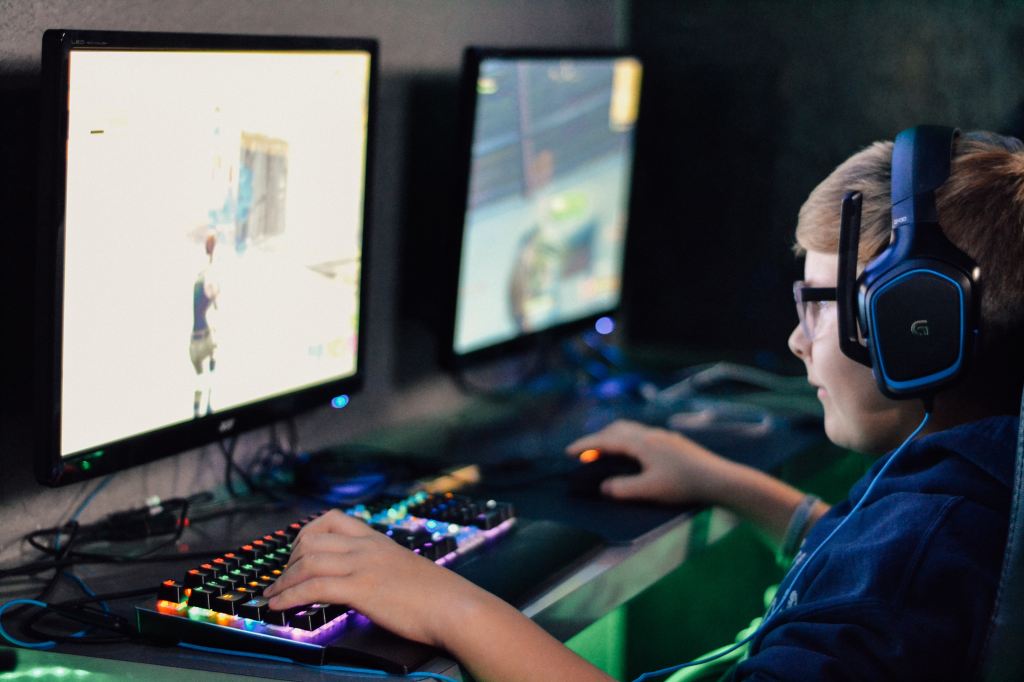
Within the last 20 years, the rise of gaming has increased exponentially. As technology gets further and further advanced, more unique and interesting games get put out to the public. Because of this, more and more people have filled up their precious time playing games. If you’re anything like me, once you start playing a game, time can fly by and before you know it, 6 hours have passed by and you just wasted a quarter of the day. However, there are some simple strategies that can allow you to better manage your time with gaming and have plenty left over for everything else.

Tips to manage gaming time:

  1. Make a list of all you have to do for the day to prioritize what needs to get done.
  2. Figure out how much time you need for certain game activities (pvp matches, raiding, battle royal) and set a time limit
  3. Don’t stay up late playing games which causes you to sleep in late
  4. Don’t try to cram games between assignments or small breaks

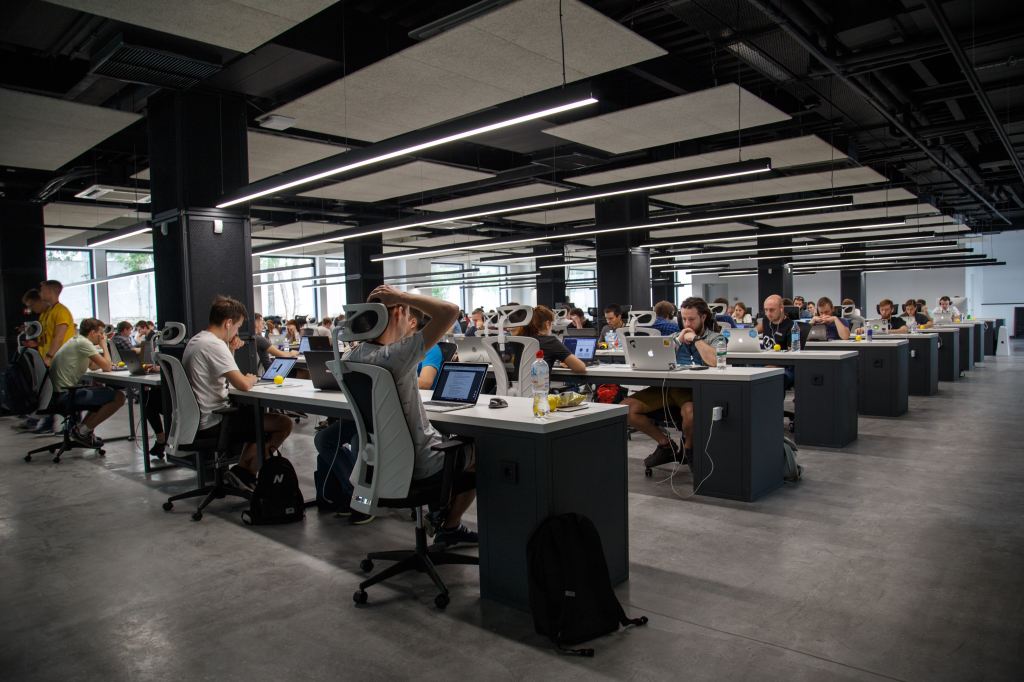
One of the things that takes up most of our daily life after college and work. We need some way to pay off our insane student loans, as well as a way to not live with our parents for the rest of our lives. While some jobs are more flexible than others and let you create your own schedule, most jobs come with the standard 9 to 5 hours. Depending on what your job is, often times the workload of the day carries over to home, or you get stressed because there is never enough time to get what you need to get done. Have no fear dear readers, below we give some tips and strategies to help keep work at work and leave plenty of time for your life outside of that.

Tips for managing time with work:

  1. Most important: Make a to do list of what needs to get done every day. This way, you can go through and get each item done while knowing exactly what you might have to continue on the following day.
  2. Learn to prioritize what needs to get done vs what is not urgent. Do what is urgent first and then get as much done with the rest.
  3. Group similar tasks together, but avoid multitasking when you can. Multitasking has been proven to be ineffective and can actually slow your overall productivity.
  4. Assign time limits to tasks. This way, you can keep your self on a schedule and not end up spending hours on a project when you could have completed it much sooner.
  5. Fit in break buffers so that you can unwind and reset in order to tackle on the rest of the days workload.

Reflection

The audience for my profile are students who are considering working while they are in college and are still deciding if they want to work full time and support themselves to be independent and live away from home, or if they should just work part time a couple days a week in order to keep up with classes and school work. I think my audience will be interested because this is a major question that comes up for most college students that do not have wealthy families that are willing to pay for their education or enough scholarships to cover their tuition.

My article works to create a discourse community at UCBA because it is a problem/question that many college students struggle to answer. It gives an insight into a student who is working full time successfully and a graduate who was able to work full time successfully at this specific institution.

When I began drafting this profile, I actually restarted three different times because I kept wanting to change ideas on what I wanted to write about. When I finally settled on my final topic, I did my two interviews and wrote them as a form of dialogue. From there, I felt that I needed an introduction into what I was talking about so I inserted an intro to my topic. From then I went through and shrunk down the writing so that it wasn’t so many filler words and to not leave it as just dialogue I felt it needed a conclusion to end the profile summing it all up. Finally I found a picture that I believe captures what my profile is about as simply as possible.

I think that by itself the article could be ready for publication. I’ll be honest here and say that I don’t read many articles and I’ve never read The Activist so I have no idea or reference as to what a “ready” article would look like or be structured like. I struggled greatly in how to write this and how it should be set up and structured so I am not even sure if it is a profile at all. Personally, I would not like this to be published in The Activist.

So You’re Thinking of Working Full-Time as a Student

There are many big changes that happen in your life after you graduate high school and move on to college. Moving out, figuring out your own schedule, and living on your own are all part of becoming independent. However, one of the biggest parts of becoming independent is also supporting yourself. Often times, it is a very difficult choice when a student is deciding if they want to work part time or full time while attending 13 credit hours or more to keep a full time student status.

In order to find out just how hard working full time while being a full times student, or how to work full time successfully while keeping up with school work might be, I asked one current student and one graduate about their experience with working full time while in school. Hannah Rose, a graduate of University of Cincinnati told me that the hardest part of working full time was “time management. You can get to the point where you feel that you don’t have enough time to study and do assignments while still working that 40 hours and it can get pretty stressful sometimes”. Harper Napier, a current student at the University of Cincinnati responded that “things can get pretty hectic if you don’t plan things out. Procrastination is your biggest enemy. If you don’t do what you’re supposed to do and let things pile up, then you find that you just have no time to finish any work”. It seems that a common struggle for students who decide to work full time is being able to successfully plan out when to do each of their assignments, study, and work. When asked how students should decide if they should work full time or not, both Hannah and Harper gave similar responses. “If you aren’t able to plan out your day and put time aside for homework, meals, studying, and any other responsibilities you might have to do, I really don’t recommend working full time while being a full time student” Harper advised. “You just need to decide if you can stay focused and really put in the time and effort into everything you’re going to do because when you are going to school full time and working full time, every minute that you have counts” was Hannah’s response.

Making the decision to work full time while being a full time student is not one that should be taken lightly. When your schedule is so full, it is very easy to fall behind in your studies to the point where you cannot come back from. Students should carefully reflect on themselves and see if they can have the perseverance and focus that is necessary in order to be successful when working and being a student.